I’ve Been a NYC Mentalist for 25 Years. Here’s What Corporate Event Planners Always Get Wrong.
By Vinny DePonto
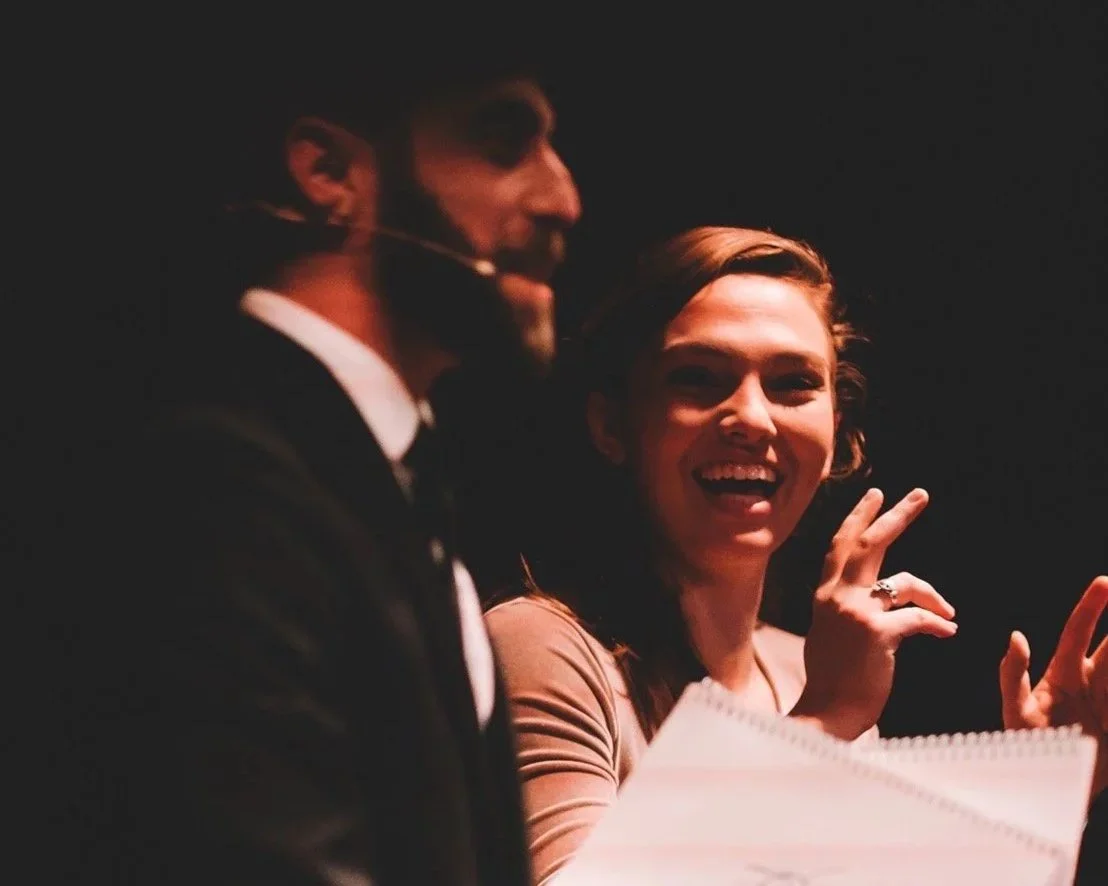
My grandfather (also Vincent DePonto) passed long before I was born. He was a theatre kid- someone who performed in plays and musicals, and who spent World War II stationed in India, teaching himself sleight of hand to entertain the men around him. He eventually passed those secrets to my father, and my father passed them to me, tucked inside a dusty shoebox filled with old tricks and novelties from the 1940s.
That shoebox is where this all started for me.
Twenty-five years later, I’ve performed for Fortune 100 companies, at the Metropolitan Museum of Art, consulted on Tony-winning Broadway productions, and built a career around one simple idea: that wonder is not a trick. It’s a feeling. And it’s one of the most powerful things you can bring into a room full of people who spend most of their days staring at spreadsheets.
If you’re planning a corporate event in NYC and wondering whether a mentalist belongs on your vendor list - and if so, how to find the right one - here’s everything I wish every event planner already knew.
The #1 Thing Planners Get Wrong: Confusing Social Media With Stage Presence
The first call I have with most event planners goes the same way. They’ve watched some impressive videos online, they have a rough budget in mind, and they assume the performer with the most followers is the best person for the job.
Here’s the thing: a great video and a great live performance are two completely different skills.
I’ve been performing for 25 years. What that means practically is that I’ve been in every kind of room - rooms that were too loud, rooms that were too small, rooms where the client changed the format an hour before showtime. Experience isn’t just about being good when everything goes right. It’s about knowing what to do when it doesn’t.
When you’re evaluating mentalists, ask yourself: have they been doing this full-time, for years, for corporate audiences specifically? Some performers charge less because they’re talented part-timers. That’s fine for a backyard party. For a client dinner or a company milestone event, you want someone whose livelihood depends on nailing it every single time.
What Format Is Right for Your Event?
This is actually one of the most important questions to get right - and it depends on a few things.
My personal favorite combination: a cocktail-hour strolling set followed by a short gathered experience at the end of the evening. Here’s why.
During cocktail hour, people are still arriving, still finding their footing, still making small talk with colleagues they might not know well. A mentalist moving through the room changes that dynamic immediately. Something strange and intimate happens between two people, a small group gathers, word spreads. By the time everyone sits down for dinner, the room is already warm.
Then, at the end of the night, bringing everyone together for a short shared experience lets them feel the wonder collectively. It’s a different thing to be astonished alone versus being astonished alongside 80 of your colleagues. That communal moment tends to be what people talk about for weeks afterward.
That said, format always depends on venue, group size, timing, and what the evening is designed to accomplish. A 40-person client dinner calls for something different than a 300-person sales conference. The first conversation I have with any client is about understanding the event before we ever talk about the performance.
Understanding the Cost (Without the Awkward Dance)
Let’s be honest: price is the thing most people want to know and least want to ask about directly.
Here’s how I think about it. When you hire a mentalist for a corporate event, you’re paying for several things at once: the performance itself, yes, but also 25 years of experience walking into unfamiliar rooms and making them work. You’re paying for responsiveness - the kind of easy, professional communication that makes your job as a planner easier, not harder. You’re paying for someone who has worked at venues across NYC, consulted on Broadway, and performed everywhere from SoHo House to Harvard. Credentials aren’t ego. They’re a track record.
The mentalists who charge less are often doing this as a side pursuit. That’s not a criticism - it’s just context. For a corporate audience that has paid to be there and represents your company’s culture, the margin for a mediocre show is essentially zero.
What drives my fee specifically: duration of the performance, whether it’s strolling, stage, or both, event size, and logistics. I don’t charge more because I’ve been on a famous podcast. I charge based on the value of the experience I actually deliver.
How Far in Advance Should You Book?
I’ve been booked a full year out. I’ve also been booked the same week - and when I have availability, I make it work.
But if you want my honest recommendation: for fall and winter events especially, reach out six months ahead. October through December is the busiest stretch of the corporate calendar, and between touring shows, keynote travel, and existing bookings, my schedule fills up faster than people expect.
The earlier you reach out, the more flexibility we both have to design something that actually fits your event rather than just squeezing me into a slot.
Does the Show Get Customized to Your Brand?
I want to give you an honest answer here, even if it’s not what you’d expect.
No - I don’t incorporate your logo into the show, or build bits around your company’s quarterly theme.
What I do instead is something I think is more valuable: I bring genuine wonder into your community. Most companies that hire me have noticed something missing. Not in their product or their strategy - in the feeling in the room. The shared sense of curiosity and connection that makes a team feel like more than a group of people with the same employer.
That’s what I’m there to restore. The show doesn’t advertise your brand. It creates an experience your people will associate with your brand - permanently.
Red Flags: When Mentalism Isn’t the Right Fit
Mentalism is a sophisticated form of entertainment. It requires presence - from me and from the audience.
Two situations where I’d genuinely advise against booking a mentalist: events where loud music will be running throughout (the kind of venue where you’re competing with a DJ at full volume), and events that are primarily oriented toward children. Mentalism lives in a particular kind of attentive, adult headspace. When that’s not the environment, even the best performance lands flat.
If you’re not sure whether your event is the right fit, ask. I’d rather have that conversation upfront than show up to the wrong room.
How I Treat the People on Stage
This is the part I care most about, and the thing that I think sets my work apart more than anything else.
I never embarrass anyone. Ever.
A lot of mentalism - and a lot of magic - uses audience members as props. Someone gets flustered, the performer gets a laugh, and the crowd moves on. I find that dynamic uncomfortable to watch and completely contrary to what I’m trying to create.
Every person who participates in my show is treated with genuine respect and warmth. I use our thoughts as a way to connect - not as material to exploit. When someone is vulnerable enough to participate in front of their colleagues, the least I can do is honor that. The best I can do is make them feel like the most interesting person in the room.
That approach, by the way, is part of why clients book me repeatedly. When people feel safe, they open up. And when they open up, the real magic happens.
A Moment I Still Think About
A quick story -
Mimi was definitely timid. Her eyes a bit nervous and her voice choked up when she spoke. When she revealed her thought to me, it felt like the room got small (even though it was a thousand person conference). It got small in a great way. It always does when a thought like this is said out loud. Like we all were Mimi for a moment. Which is the point. Mimi revealed that the only time her mother showed her unconditional love was when she called her on her birthday. Mimi revealed this after I mentioned a word that had been stuck in her head related to this memory.
We often think we’re stuck in our own little isolated bubbles, but that’s truly one of the greatest tricks of the mind. We all possess a moment similar to Mimi’s. It’s not just a memory but an ancient story of feeling loved told time and time again. We forget though. We get so buried in other things. To me that’s the beauty of mentalism - if done right it can remind us all just how much we are alike deep down.
When I picture Mimi I picture her stopping me on my way out to catch the bus back to the hotel. I said to her thank you for standing up there and sharing that with all of us. We talked a bit and when leaving she smiled and looked me in eyes but as if she was looking beyond my eyes and she just said thank you.
I’m not a therapist, or a scientist, or a doctor - I don’t think by any means that I am curing people - I am a performer, who’s job it is to reflect the world back to an audience albeit with some fantasy and wonder. I tell old stories that may help lift you out of the humdrum for just a moment in hopes you remember that we have an indispensable need for one another. That can be healing in a small way. I need that reminder too. So that we can remember to feel awe in each other again.
The Thing No Other Mentalist’s Website Will Tell You
Book the performer, not the performance.
I know that sounds simple. But after years of doing this, the pattern I see most is this: the event planners who have the best experiences are the ones who find someone they genuinely enjoy working with — someone responsive, easy, fun, professional — and then find reasons to bring them back.
Mentalism fits more events than people realize. Client dinners. Product launches. Holiday parties. Team offsites. Sales kickoffs. Once you’ve worked with someone you trust, you stop reinventing the wheel every time and start building something better: a recurring experience your community actually looks forward to.
Find your person. Then keep them.
Vinny DePonto is a NYC-based mentalist, theatre-maker, and self proclaimed wonder activist. He has performed and consulted for Broadway productions, Netflix specials, and corporate events worldwide. To inquire about booking, visit vinnydeponto.com.